Do You Get Lost in the
Bermuda Triangle of French?

Write your awesome label here.
EVERYDAY FRENCH 
You understand your French teacher. 
You understand your textbook.
You understand grammar exercises.
You even understand podcasts and YouTube videos made for French learners.

So…

Why does everything suddenly fall apart when you arrive in France?
Or when you watch a French film without subtitles?
Or when two French people start chatting naturally?

One minute, you are following the conversation.
The next…
You have absolutely no idea what is happening.

Sound familiar?
Don’t worry.

Nothing is wrong with your French.
You have simply entered a part of the language nobody prepared you for.
A place where French learners lose their way every day.

Welcome to…

The Bermuda Triangle of French

You have probably heard of the Bermuda Triangle: the legendary area of the Atlantic where ships and planes were said to mysteriously disappear…


In the Bermuda Triangle of French, you will not disappear. But your understanding might.

You recognize a few words.
You catch bits and pieces.
But you cannot follow the conversation anymore.

Your French has not vanished.
You have simply moved from calm water into the open sea.

From the Swimming Pool to the Ocean

Learning French in class is like learning to swim in a swimming pool.


The water is calm. The conditions are controlled. The vocabulary is carefully chosen. 
Your teacher speaks clearly and often a little more slowly. 
You feel confident.


Then you arrive in France and jump into the ocean.

There are waves.

There are currents.


People speak naturally, interrupt each other, shorten words and use expressions you have never learned.


Suddenly, you think:

“Wait… I thought I knew how to swim.”

You do.


The problem is not your French.

The environment has changed.


Everything you have learned still matters:

• your grammar

• your vocabulary

• your pronunciation


None of it was a waste of time.

You are not starting again from zero.


You simply need to learn how to navigate one missing area of the language : the Bermuda Triangle of French.

What Is the Bermuda Triangle of French?
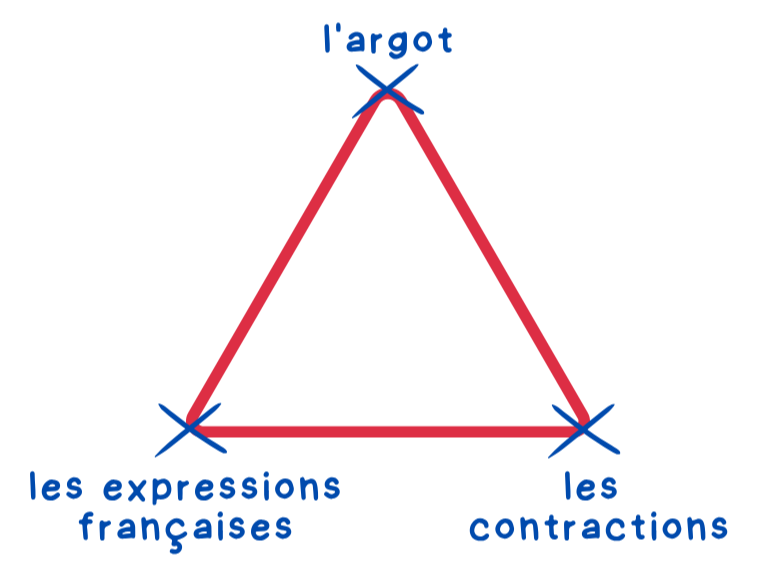
The Bermuda Triangle of French is not another version of French.


It is not secret French.

It is not even necessarily advanced French.

It is the part of everyday spoken French that is often missing from traditional lessons.


And inside this area, three currents can quickly pull you off course:

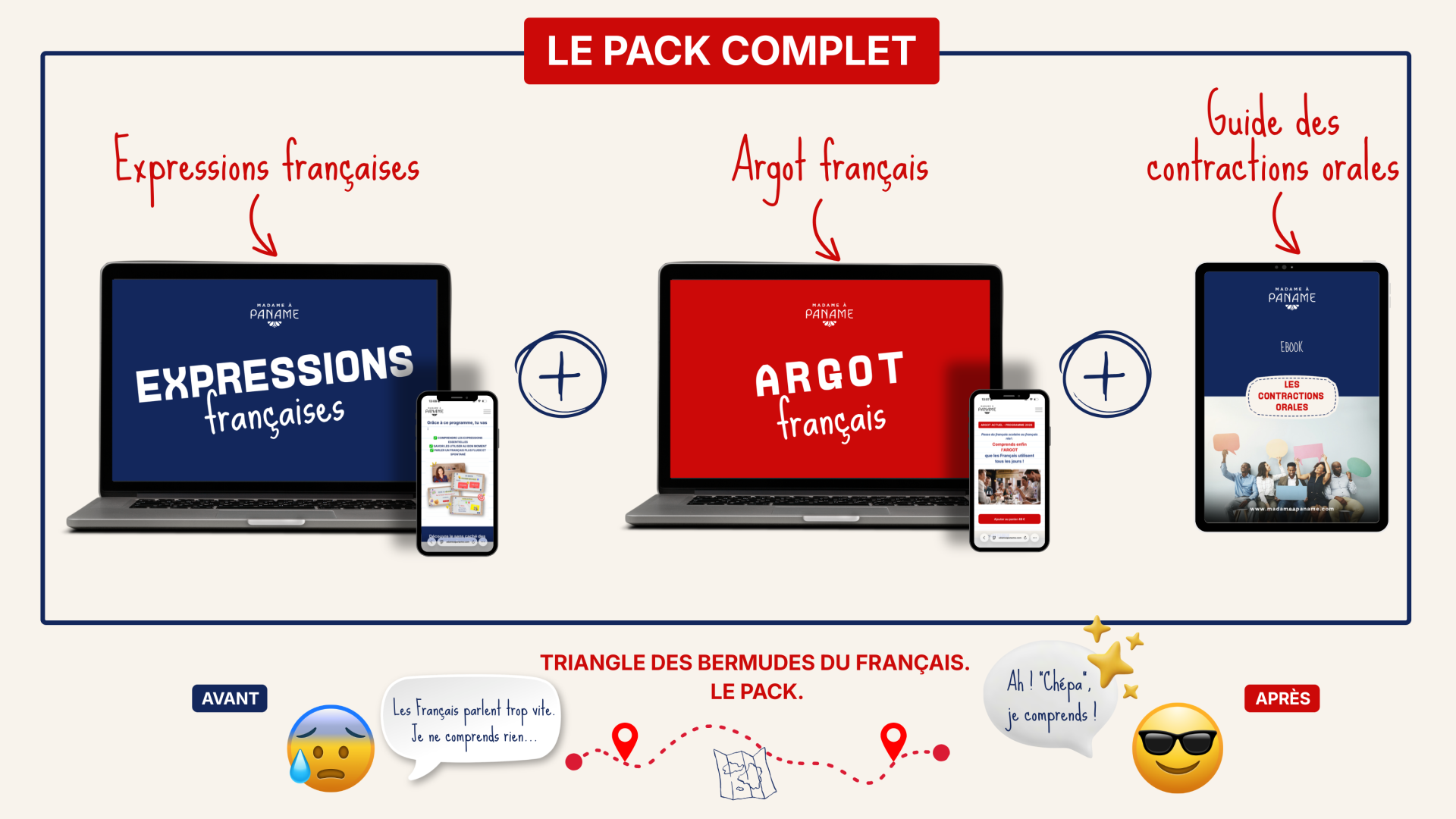
🌊 Spoken contractions

🌊 Everyday expressions

🌊 Slang

Most learners think they have one big listening problem.


In reality, they are dealing with three different challenges at the same time.


The good news?

These currents are not endless or impossible to master.


The same contractions, expressions and slang words come back again and again.


Once you learn to recognize them, you stop feeling lost.

You learn how to navigate.

The Three Currents of the Bermuda Triangle

Inside the Bermuda Triangle of French, three currents can quickly pull you off course.

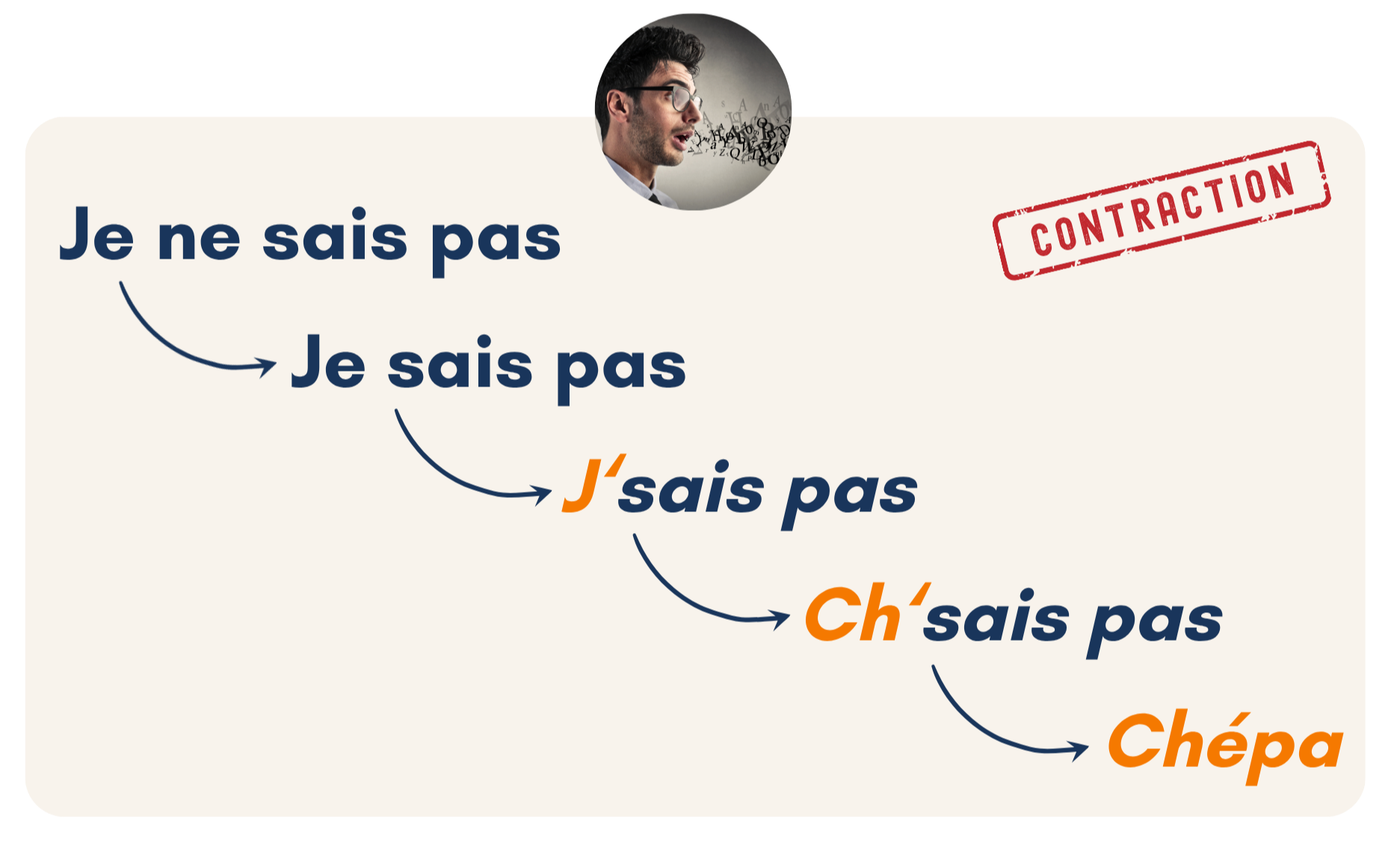
🌊 Current #1: Spoken Contractions

You think the French speak FAST.
Actually, it’s mainly because French people don’t pronounce every word exactly as it appears in a textbook.

They say:

Chépa instead of Je ne sais pas

B’jour instead of Bonjour

P’t-être instead of Peut-être


The words are not new.

They simply sound different.


If you have never learned to recognize these contractions, even familiar sentences can become impossible to understand. Don’t worry, it’s always the same contractions that keep recurring.

🌊 Current #2: Everyday Expressions

Sometimes, you understand every word but still miss the meaning.


For example:

Il m’a posé un lapin.


Literally, it sounds like someone “put down a rabbit.”

In reality, it means:

He stood me up.


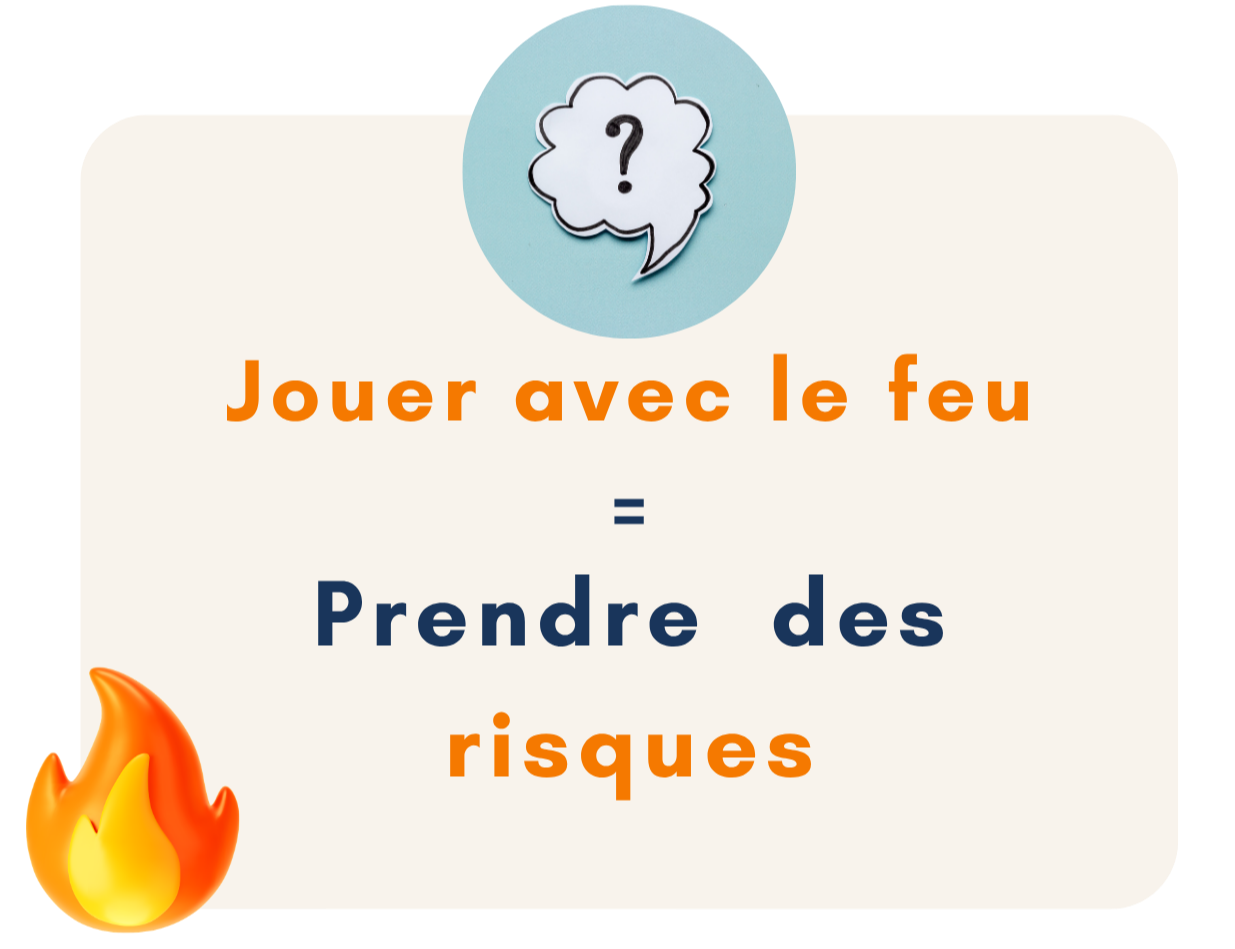
French conversations are full of expressions such as:

Il est à côté de la plaque 🕳️ (= Il ne comprend rien)

Je vais tomber dans les pommes 🍎 (= Je vais m’évanouir)

Tu racontes des salades 🥗 (= Tu racontes des mensonges)

You may know the vocabulary, but the complete expression means something different.

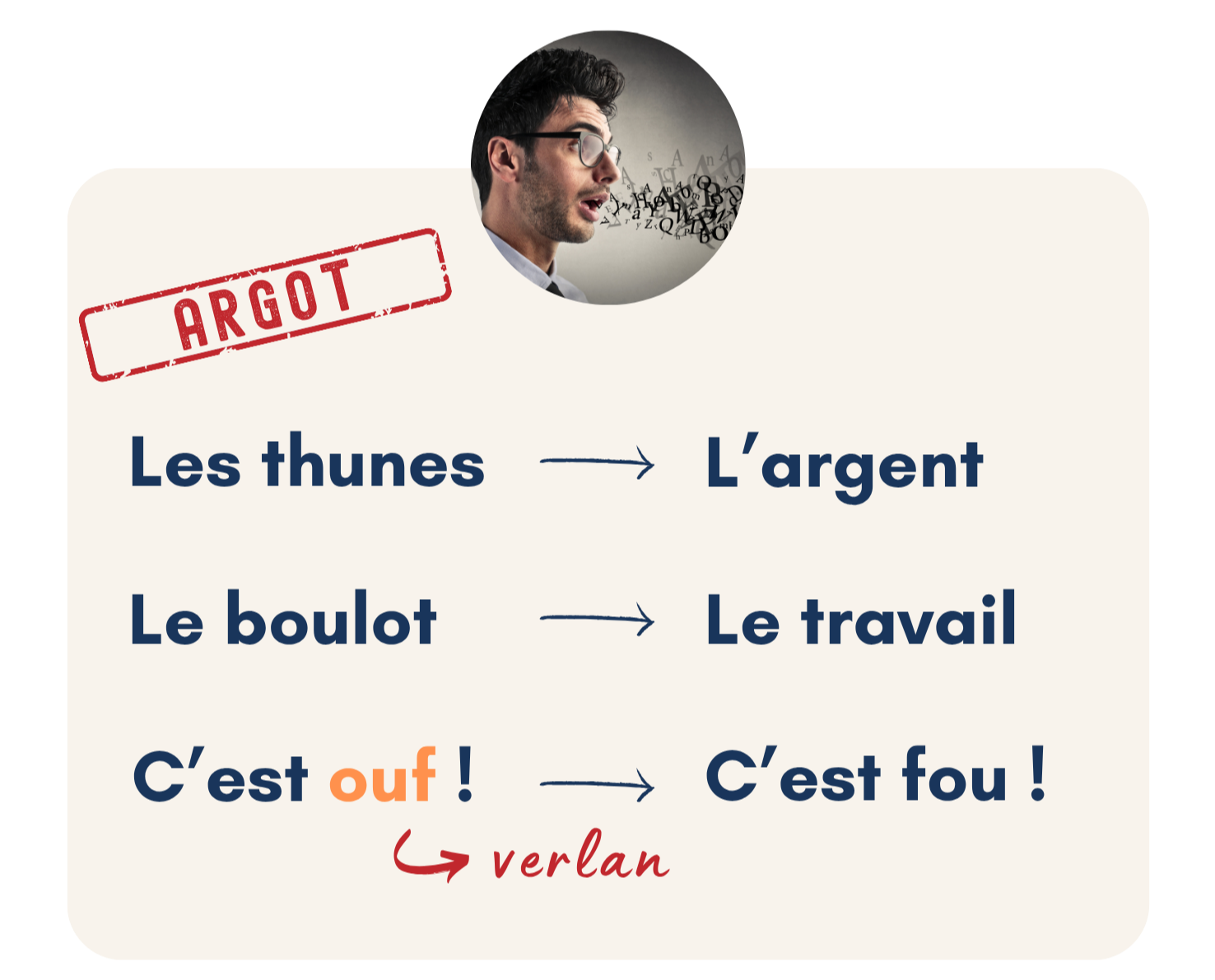
🌊 Current #3: Everyday Slang

French people also use informal and slang words constantly.

For example:

bosser instead of travailler

fric instead of argent

relou instead of pénible

bouffer instead of manger


You do not need to use all these words yourself.

But you need to recognize the most common ones if you want to follow real conversations.

Why You Feel Overwhelmed

The real difficulty is that these three currents rarely appear separately.

Imagine hearing: "Chépa, laisse tomber, c’est relou…"


In one short sentence, you have:

• a spoken contraction: Chépa (= je ne sais pas)

• an everyday expression: Laisse tomber

• slang: Relou


Your brain is not facing one problem.


It is facing three at the same time, well, here comes the storm.


That is why you can understand French in class and suddenly feel completely lost in France.

Is It Possible to Cross the Bermuda Triangle?

Yes.

And it is much easier than it looks.

The Bermuda Triangle of French is not an enormous new language that you need to learn from zero.


The same contractions appear again and again. The same expressions come back in everyday conversations. The same slang words are used constantly. 


Once you know what to listen for, you start recognizing them everywhere.


It is like a stone on a path.

Until you see it, you keep tripping over it.

Once you know it is there, you simply step around it and continue walking.


The goal is not to replace the French you have already learned. Your grammar and vocabulary are still essential (of course 😏). You are simply adding the missing part of the map.

Learn to Read the Currents 🌊

In class, you learned how to swim in calm water.

Now, you need to learn how to recognize the currents of real spoken French.

Once you can identify :

• contractions

• expressions

• slang

French conversations stop feeling mysterious. You no longer spend all your energy trying not to get lost.

You can focus on what actually matters:

Understanding the story.

Joining the conversation.

Making friends. 

Living your life in French.

The Bermuda Triangle does not disappear.

You simply learn how to cross it.

FORMATION

The Bermuda Triangle PACK 

Everything French textbooks forgot to teach you !
100% Money-Back Guarantee (within 7 days)
TLDR:
If you understand French in class but struggle to follow real conversations, you’re probably not missing grammar or vocabulary.

You’re missing the Bermuda Triangle of French: the part of everyday spoken French where so many learners get lost. It’s where your understanding seems to disappear, and it’s a part of the language that most French courses never explicitly teach.


🌊 It has 3 main currents:
Spoken contractions (like Chépa instead of Je ne sais pas)
Everyday expressions (like Il m’a posé un lapin)
Slang (like bosser or fric)

The good news?

You don’t need to learn a whole new language.
You simply need to recognize these recurring patterns.

Once you do, authentic French becomes much easier to understand.
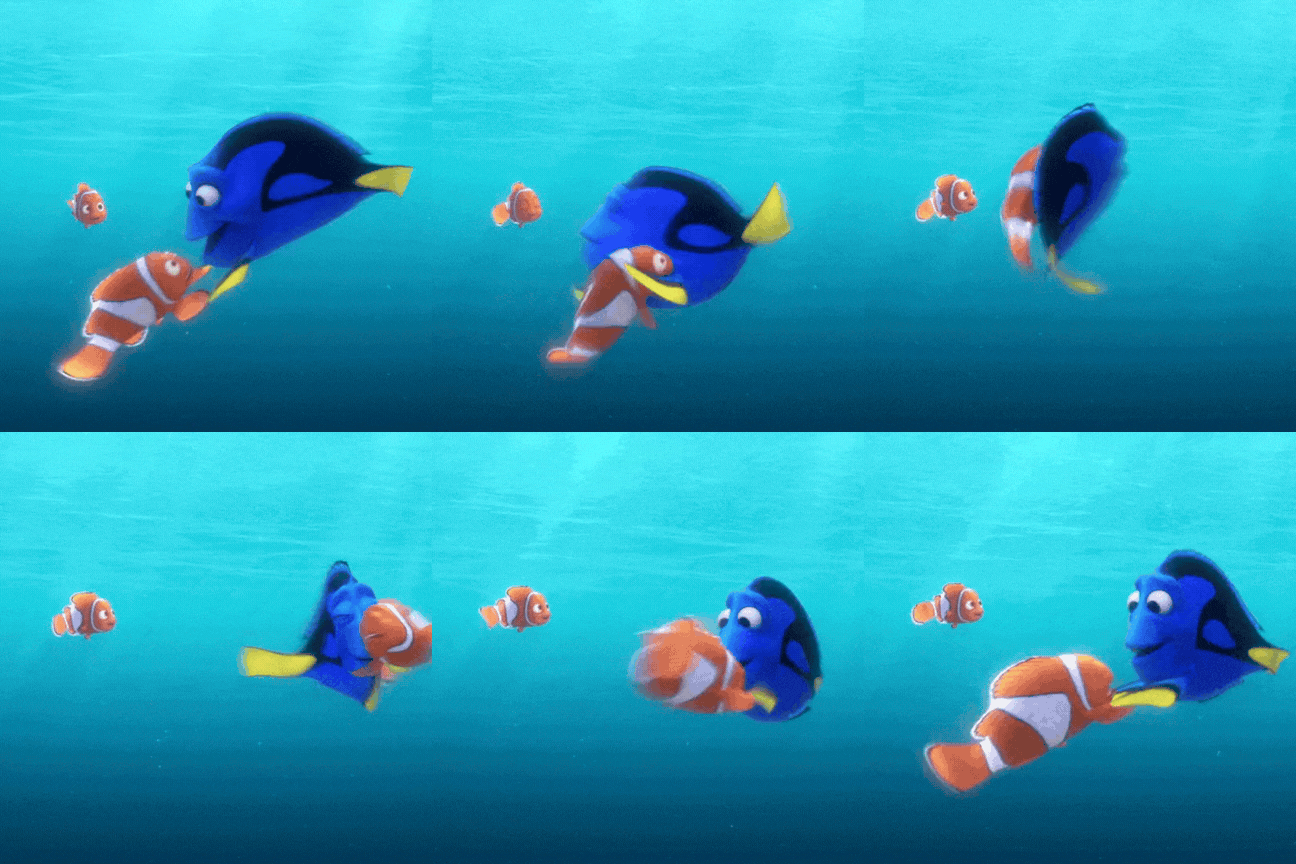
You feel "comme un poisson dans l'eau" (= you feel comfortable).

FOIRE AUX QUESTIONS 

Why can I understand French in class but not real French conversations?

Because classroom French and everyday spoken French are different.

In class, teachers usually speak clearly, use standard vocabulary and avoid many spoken shortcuts.

In real life, French people naturally use contractions, idiomatic expressions and slang. These features are rarely taught explicitly, which is why authentic conversations often feel much harder to understand.

What is the Bermuda Triangle of French?

The Bermuda Triangle of French is a simple way to describe the part of everyday spoken French where many learners get lost.

It combines three common features of authentic French:
• spoken contractions
• everyday expressions
• slang

When these three elements appear together, understanding French becomes much more difficult, even if your grammar and vocabulary are already good.

Is the Bermuda Triangle of French a real linguistic concept?

It’s a metaphor I use with my students to explain why you get lost in a very specific triangular area of the French language!

It helps French learners understand why authentic conversations can feel so different from classroom French.

Do I need to use slang to speak good French?

No.

Understanding slang is much more important than using it.

You can speak French without using informal vocabulary.

However, recognizing common slang words will help you understand films, podcasts and everyday conversations much more easily.

Why do French people seem to speak so fast?

Most of the time, they are not actually speaking much faster (I said “most of the time” 😅)

They are shortening words, dropping sounds and using spoken contractions that are common in everyday French.

Once you learn to recognize these patterns, French suddenly sounds much slower and much clearer.

Are spoken contractions always the same?

Many of them are.

Contractions such as Chépa, T’es, J’vais or P’t-être appear constantly in everyday French.

You do not need to memorize thousands of new forms.

Learning the most common ones already makes a huge difference.

Are everyday French expressions impossible to guess?

Sometimes.

Many French expressions cannot be understood literally.

For example, Il m’a posé un lapin has nothing to do with rabbits.

That’s why learning common expressions is essential if you want to understand authentic French conversations.

Is everyday French very different from textbook French?

Not completely.

The grammar is mostly the same.

What changes is how people actually speak.

French people naturally shorten words, use informal vocabulary and rely on common expressions that traditional textbooks often don’t teach.

How can I understand authentic French more easily?

Focus on the three currents of the Bermuda Triangle of French:
• Learn the most common spoken contractions.
• Memorize everyday expressions instead of translating them word by word.
• Recognize the slang words French people use every day.

You don’t need to know everything.

You simply need to recognize the patterns that come back again and again.

Empty space, drag to resize
Créé avec